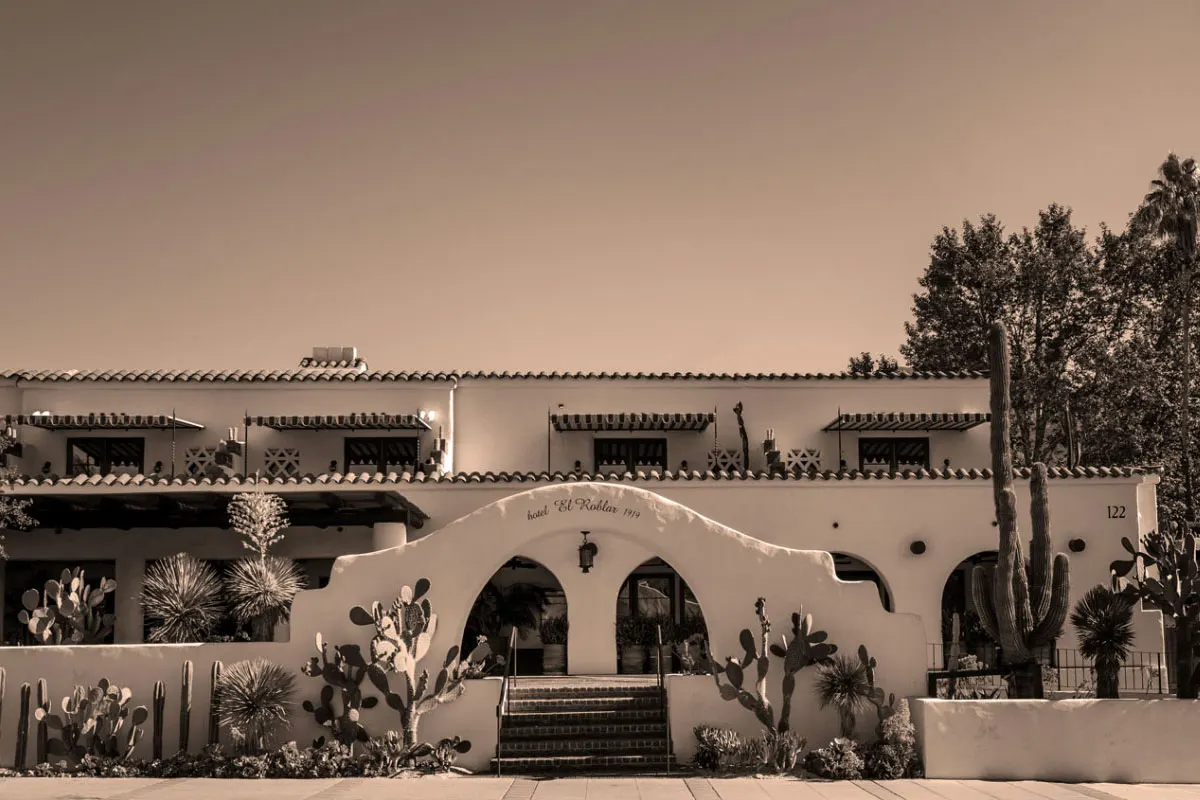
Restoring El Roblar

Established in 1919, Hotel El Roblar is Ojai’s longest-standing hotel. Just over a century later, Eric Goode, Ramin Shamshiri, Warner Ebbink and Jeremy McBride have restored the two-acre property to its historical charm and namesake. True to both its Spanish Revival and early Californian architectural roots, Hotel El Roblar blends its historic design with a modern sensibility.

Nestled in the heart of the small town of Ojai, the 50-room hotel features two distinct dining venues helmed by Chef Brandon Boudet: Condor Bar, serving modern Mexican cuisine and a café offering breakfast and lunch.

Additional spaces include The Mariposa Ballroom, a historic event space featuring an extensive hand-carved wall relief depicting the natural wonders of Ojai, lovingly restored, to host any event. A lush, Spanish walled garden filled with history and beauty, features soaring palm and dragon trees, charming fountains, and vibrant, potted plants overflowing with color.

A serene pool is set against the backdrop of the scenic Topatopa Mountains. Guest rooms are divided among the Main House (31 rooms, many with spacious garden terraces), 11 private bungalows, and the newly added Sycamore House, offering 8 additional rooms.
History of the Land

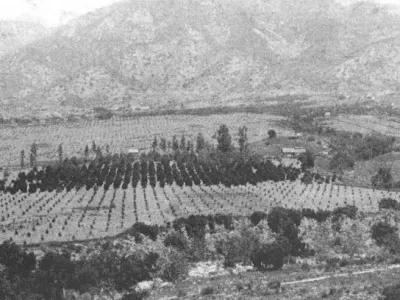
A black-and-white photo shows an orchard with rows of trees in a valley, small scattered buildings, and mountains in the background.

A Brief History

Agriculture

According to the Ventura Signal, in 1883, Ojai was known as the place where crops never fail. Originally Ojai’s principal products were wheat, barley and potatoes. After the successes of F.S.S. Buckman and Robert Lyon with citrus, other agriculturalists in the canyon and both valleys included orange and lemon trees in their orchards.

Location

At the turn of the century, Ojai was little more than a dusty town called Nordhoff, settled by oil and gold prospectors, ranchers and farmers. But its fortunes changed when Edward D. Libbey, a wealthy Ohio glass manufacturer, discovered the town while vacationing in the early 1900s.

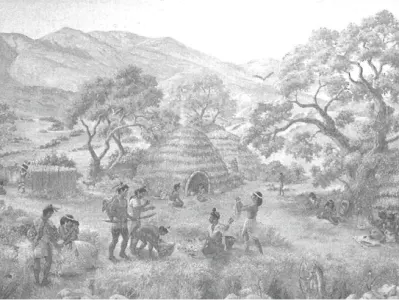
A black-and-white illustration of an Indigenous village shows people engaging in daily activities near dome-shaped huts with mountains and trees in the background. Some gather plants, others talk or rest under trees.

Valley of the moon

The Chumash

At the time of Spanish contact, the Chumash inhabited the area from Malibu Canyon to as far north as Paso Robles, and from Cuyama to the Channel Islands. The Spaniards were impressed by Chumash craftsmanship. Chumash basketry is considered to be among the finest in America. Their baskets filled every role that pots did among native cultures elsewhere.